
The One Thing Every New Development Must Have
Developers are trying to recreate the vibe found in the country’s favorite foodie towns. That means adding more restaurants and bars.
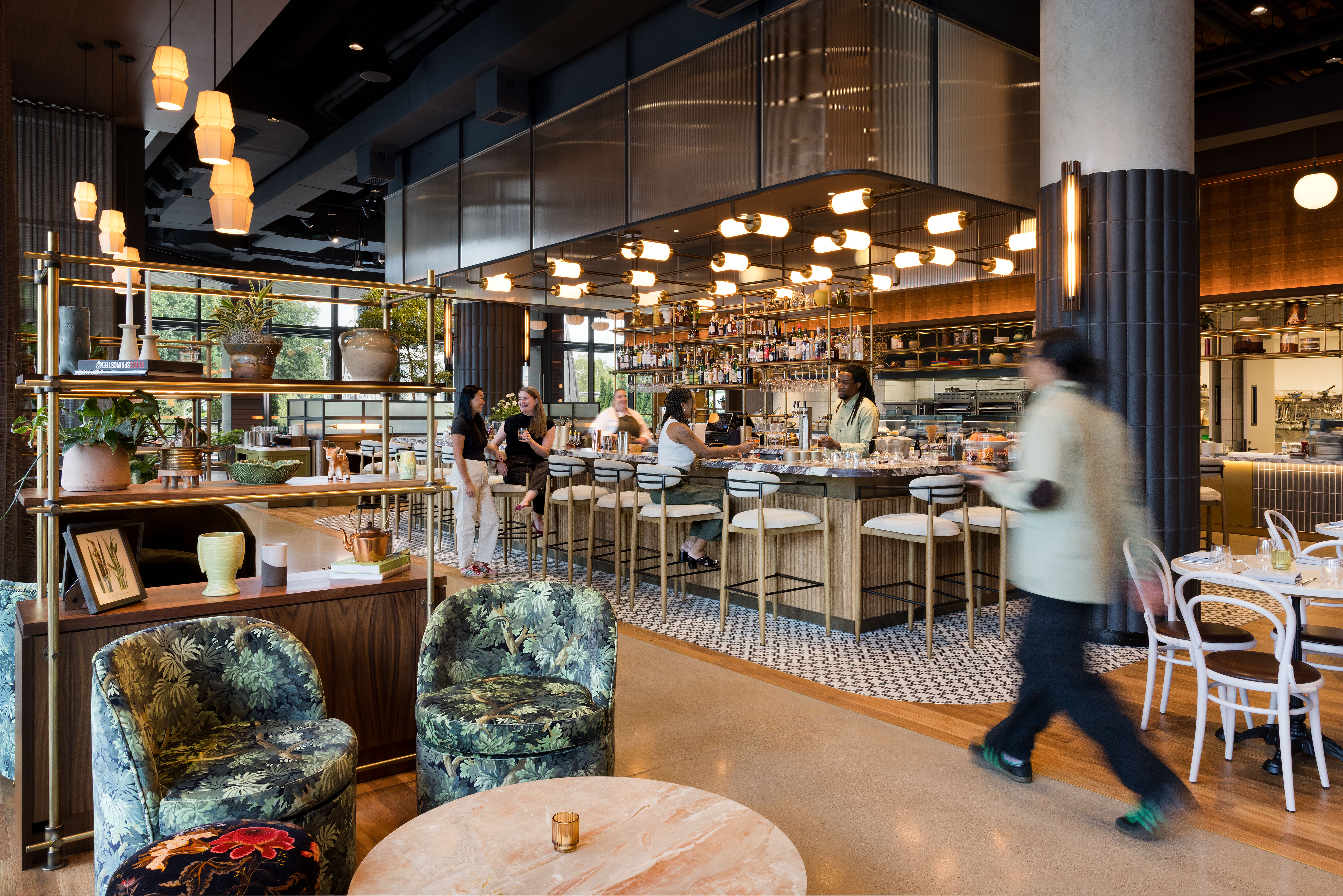
The restaurant software company BLogic Systems recently ranked the top 10 U.S. cities for great, affordable food, and the winners weren’t very surprising. Charleston, S.C., New Orleans and Portland, Maine, are well-trod foodie destinations, in part because their beloved independent restaurants are clustered around older, walkable residential districts.
More and more, this is the type of dynamic that developers aim to recreate, said Kurt Volkman, a Chicago architect and urban planner.
The industry calls these planned communities “live, work, play” projects, but they should probably add “eat” to that label. Restaurants and bars are among the most important elements to consider when conceiving a new development, Mr. Volkman said, because they serve as gathering spaces and provide “the energy and vitality” that successful communities need.
The first American suburbs were focused on privacy rather than connection, said Jaque Bethke, an interior designer who runs an eponymous design-build firm. But these days, that lifestyle doesn’t suit many younger and older renters, who can find it isolating. She compared today’s planned communities to the luxury hotels she has helped conceive. “Part of what makes them special,” Ms. Bethke said, is that “you don’t feel the need to leave, because the place itself enhances how you live.”
In New Jersey, SJP Properties had that idea in mind as it redeveloped a section of downtown Morristown into the 375,000-square-foot M Station, said Alexander Erdos, a senior vice president at the company. The project’s new office and retail spaces are within walking distance of older neighborhoods and new residential high rises. The company purposefully lured a mix of restaurants, from chains like Sweetgreen to the farm-centric The Morris Proper. The once sleepy district “has turned into an all-day town,” Mr. Erdos said.
Restaurant recruitment is also now a focus at The Woodlands, a 50-year-old planned township just outside of Houston that has tried to adapt to the needs of new residents. Once a bedroom community with vast green space, it now has a decidedly urban dining, shopping and residential district, said David O’Reilly, the chief executive officer of the real estate investment company that operates it.
“We used to design for cars,” Mr. O’Reilly said, “but you don’t experience life through a windshield.”
